History
Decades of straw and natural building milestones, and CASBA's part in them, on one page.
Decades of straw and natural building milestones, and CASBA's part in them, on one page.
Straw Bale Construction is invented! Derived from the historical sod houses built by settlers in the wider region, blocks of straw took the place of stacked sod thanks to the sandy soils in the aptly-named Sandhills of Nebraska and the recently-invented baling machine. Reports of an early hay bale school house being eaten by cows leads to protecting straw walls with mud / clay plaster. Examples of this early building system can still be found standing today, and plaster over straw remains a typical build-up in contemporary straw bale construction
Straw Bale Construction is invented! Derived from the historical sod houses built by settlers in the wider region, blocks of straw took the place of stacked sod thanks to the sandy soils in the aptly-named Sandhills of Nebraska and the recently-invented baling machine. Reports of an early hay bale school house being eaten by cows leads to protecting straw walls with mud / clay plaster. Examples of this early building system can still be found standing today, and plaster over straw remains a typical build-up in contemporary straw bale construction
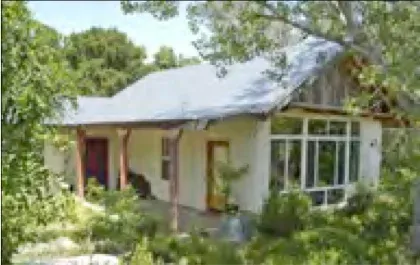
Straw as a building material has passed one test that can't be run in a lab, the test of time. Thanks to early efforts of settlers in Nebraska, we have examples of load-bearing straw bale structures from the 1920's that are still standing today, many w/ original wheat straw bales and "gumbo mud" plaster still intact, showcasing the durability and longevity of straw bale buildings. Two examples that can be visited today, the Simonton House & Pilgrim Holiness Church are pictured then & now below.
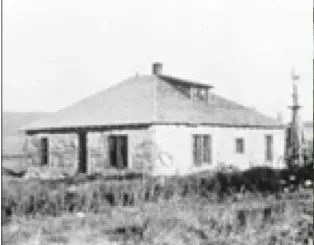
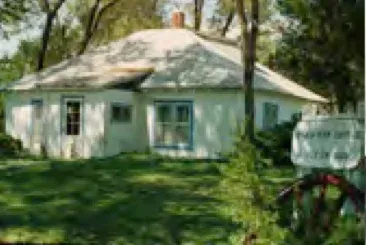
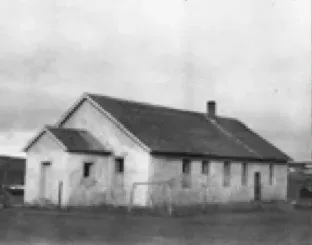
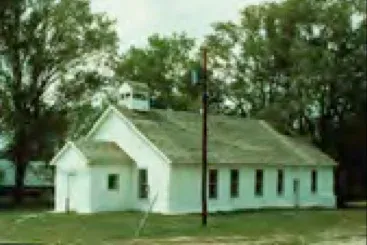
Straw as a building material has passed one test that can't be run in a lab, the test of time. Thanks to early efforts of settlers in Nebraska, we have examples of load-bearing straw bale structures from the 1920's that are still standing today, many w/ original wheat straw bales and "gumbo mud" plaster still intact, showcasing the durability and longevity of straw bale buildings. Two examples that can be visited today, the Simonton House & Pilgrim Holiness Church are pictured then & now below.
"A Round House of Straw Bales" by Bob Doolittle in Mother Earth News (tinyurl.com/yn7u3bmm)
Lloyd Kahn's book Shelter includes an article 'Baled Hay' by Roger Welsch, highlighting the historical buildings made of baled hay in the late 1800s in Nebraska where 'straw bale building' was born.
"Hay Houses & Straw Buildings" by Mother Earth News editors (tinyurl.com/3t46p553)
Inspired by the Shelter article, architect Jon Hammond builds a straw bale-insulated house in Winters, California. Its publication in Fine Homebuilding Magazine sparks the modern straw bale building movement, with many straw bale buildings constructed during the decade, mostly in the American SW
James Kalin invites Matts Myhrman, Judy Knox, David Bainbridge, Athena Swentzell-Steen, and Pliny Fisk to Oracle, AZ to construct a temporary load-bearing straw bale building in the Nebraska-style
Inspired by the Shelter article, architect Jon Hammond builds a straw bale-insulated house in Winters, California. Its publication in Fine Homebuilding Magazine sparks the modern straw bale building movement, with many straw bale buildings constructed during the decade, mostly in the American SW
James Kalin invites Matts Myhrman, Judy Knox, David Bainbridge, Athena Swentzell-Steen, and Pliny Fisk to Oracle, AZ to construct a temporary load-bearing straw bale building in the Nebraska-style
"Houses the Cows Would Love to Eat" by Patricia Leigh Brown is published in the New York Times
The California Rice Straw Burning Reduction Act is passed, forcing Rice Farmers to find alternative methods of disposing of their straw waste
Matts Myhrman & Judy Knox found The Last Straw Journal in Tucson, AZ
The Straw Bale House by Athena Swentzell Steen, Bill Steen & David Bainbridge
Build It With Bales: A Step-By-Step Guide to Straw-Bale Construction by Matts Myhrman and Steve MacDonald
CA Assemblyman Byron Sher spearheads effort to help rice farmers find markets for their straw, CA State Guidelines for Straw Bale Structures (AB1314) is passed. These are voluntary, and must be adopted at the local level before being utilized or enforced. In CA, this is the closest thing to a straw bale 'Building Code' that exists.
The California Straw Building Assoc. (CASBA) is formed after a chance meeting of like minds at a Natural Building Colloquium in New Mexico and the plane ride home. Turko Semmes, Greg McMillan and Christopher Prelitz call the first meeting at a motel on the Carrizo Plain of San Luis Obispo County
CA Health & Safety Code HS18944.30 - Guidelines for the construction of Straw Bale Structures, effective Jan 1
Napa County, CA and the Tucson-Pima County region in AZ adopt the first official straw bale codes
Build It With Bales: A Step-By-Step Guide to Straw-Bale Construction V2 by Matts Myhrman and Steve MacDonald
Austin, TX and the State of New Mexico adopt straw bale building codes
Pamela Wadsworth-Goode & Kelly Lerner assemble CASBA's Building Officials' Guide to Straw-Bale Construction, a compilation of testing data, structural / moisture / fire info and other subjects to assist officials in permitting & inspecting straw bale buildings
CASBA hosts the First International Straw Building Conference in San Francisco, CA. Organized by members Ann Edminster and Bruce King, it is attended by over 120 straw bale building experts from around the world
CASBA publishes A Straw Bale Construction Sourcebook, a book of straw bale details and construction methods. The effort is led by architect, professor and straw bale pioneer Ken Haggard with many members contributing
"Houses the Cows Would Love to Eat" by Patricia Leigh Brown is published in the New York Times
Matts Myhrman & Judy Knox found The Last Straw Journal in Tucson, AZ
The Straw Bale House by Athena Swentzell Steen, Bill Steen & David Bainbridge
Build It With Bales: A Step-By-Step Guide to Straw-Bale Construction by Matts Myhrman and Steve MacDonald
The California Straw Building Assoc. (CASBA) is formed after a chance meeting of like minds at a Natural Building Colloquium in New Mexico and the plane ride home. Turko Semmes, Greg McMillan and Christopher Prelitz call the first meeting at a motel on the Carrizo Plain of San Luis Obispo County
Build It With Bales: A Step-By-Step Guide to Straw-Bale Construction V2 by Matts Myhrman and Steve MacDonald
Pamela Wadsworth-Goode & Kelly Lerner assemble CASBA's Building Officials' Guide to Straw-Bale Construction, a compilation of testing data, structural / moisture / fire info and other subjects to assist officials in permitting & inspecting straw bale buildings
CASBA hosts the First International Straw Building Conference in San Francisco, CA. Organized by members Ann Edminster and Bruce King, it is attended by over 120 straw bale building experts from around the world
CASBA publishes A Straw Bale Construction Sourcebook, a book of straw bale details and construction methods. The effort is led by architect, professor and straw bale pioneer Ken Haggard with many members contributing
The California Rice Straw Burning Reduction Act is passed, forcing Rice Farmers to find alternative methods of disposing of their straw waste
CA Assemblyman Byron Sher spearheads effort to help rice farmers find markets for their straw, CA State Guidelines for Straw Bale Structures (AB1314) is passed. These are voluntary, and must be adopted at the local level before being utilized or enforced. In CA, this is the closest thing to a straw bale 'Building Code' that exists.
CA Health & Safety Code HS18944.30 - Guidelines for the construction of Straw Bale Structures, effective Jan 1
Napa County, CA and the Tucson-Pima County region in AZ adopt the first official straw bale codes
Austin, TX and the State of New Mexico adopt straw bale building codes
Paul Lacinski & Paul Bergeron write Serious Straw Bale: A Home Construction Guide for all Climates, published by Chelsea Green
Daniel Chiras writes The Natural House, a complete guide to healthy energy-efficient, environmentally-sensitive homes, with a chapter on straw bale
A straw bale seismic & moisture testing program is initiated with a Calif. Dept. of Food & Agriculture grant and contributions from CASBA fundraising. The $250,000 effort was led by CASBA member Bruce King, PE., with help from other members including engineers Mark Aschheim, David Mar and Kevin Donahue, architects Kelly Lerner and Dan Smith, and contractor Tim Owen-Kennedy and his company Vital Systems
Bill & Athena Steen write Beauty of Straw Bale Homes, published by Gibbs Smith
After a two year concerted effort led by architect Martin Hammer, with the help of Bruce King and Dan Smith, California Senate Bill 332 (SB332) was signed by Governor Gray Davis. This Bill revised the previous California Guidelines because they contained 'requirements that . . . were either unnecessary or detrimental.'
Catherine Wanek writes The New Strawbale Home, published by Gibbs Smith
Martin Hammer and other members worked diligently on 'Appendix L - Straw Bale Construction,' a proposed appendix which would officially incorporate straw bale into the California Building Code. After numerous disappointments, they turn their sights to the International Residential Code instead
Bill & Athena Steen write Small Strawbale, published by Gibbs Smith
Chris Magwood & Peter Mack co-author More Straw Bale Building: A Complete Guide to Designing and Building with Straw, published by New Society Publishers. This covers the entire process of building a straw bale structure; from developing plans, code compliance, building details, construction methods, financing and zoning issues
Design of Straw Bale Buildings written by Bruce King; published by Green Building Press
Bruce King and his Ecological Building Network receive a grant from the Ayrshire Foundation and contributions from CASBA to fund ASTM E119-05a fire testing, an important step in the official testing requirements needed to satisfy building, lending & insurance officials. An earth plastered wall passes with a 1 hour rating, and a lime-cement plastered wall receives a 2 hour rating
Ken Haggard and Polly Cooper co-author Fractal Architecture: Design for Sustainability, published by Booksurge
Wayne Bingham & Colleen Smith write Strawbale Home Plans, published by Gibbs Smith
Paul Lacinski & Paul Bergeron write Serious Straw Bale: A Home Construction Guide for all Climates, published by Chelsea Green
Daniel Chiras writes The Natural House, a complete guide to healthy energy-efficient, environmentally-sensitive homes, with a chapter on straw bale
Bill & Athena Steen write Beauty of Straw Bale Homes, published by Gibbs Smith
Catherine Wanek writes The New Strawbale Home, published by Gibbs Smith
Bill & Athena Steen write Small Strawbale, published by Gibbs Smith
Chris Magwood & Peter Mack co-author More Straw Bale Building: A Complete Guide to Designing and Building with Straw, published by New Society Publishers. This covers the entire process of building a straw bale structure; from developing plans, code compliance, building details, construction methods, financing and zoning issues
Design of Straw Bale Buildings written by Bruce King; published by Green Building Press
Ken Haggard and Polly Cooper co-author Fractal Architecture: Design for Sustainability, published by Booksurge
Wayne Bingham & Colleen Smith write Strawbale Home Plans, published by Gibbs Smith
A straw bale seismic & moisture testing program is initiated with a Calif. Dept. of Food & Agriculture grant and contributions from CASBA fundraising. The $250,000 effort was led by CASBA member Bruce King, PE., with help from other members including engineers Mark Aschheim, David Mar and Kevin Donahue, architects Kelly Lerner and Dan Smith, and contractor Tim Owen-Kennedy and his company Vital Systems
After a two year concerted effort led by architect Martin Hammer, with the help of Bruce King and Dan Smith, California Senate Bill 332 (SB332) was signed by Governor Gray Davis. This Bill revised the previous California Guidelines because they contained 'requirements that . . . were either unnecessary or detrimental.'
Martin Hammer and other members worked diligently on 'Appendix L - Straw Bale Construction,' a proposed appendix which would officially incorporate straw bale into the California Building Code. After numerous disappointments, they turn their sights to the International Residential Code instead
Bruce King and his Ecological Building Network receive a grant from the Ayrshire Foundation and contributions from CASBA to fund ASTM E119-05a fire testing, an important step in the official testing requirements needed to satisfy building, lending & insurance officials. An earth plastered wall passes with a 1 hour rating, and a lime-cement plastered wall receives a 2 hour rating
The International Straw Builders' Conference (ISBC) takes place in September in Estes Park, Colorado. Hosted by the Colorado Straw Building Association (COSBA, now part of the Natural Building Alliance)
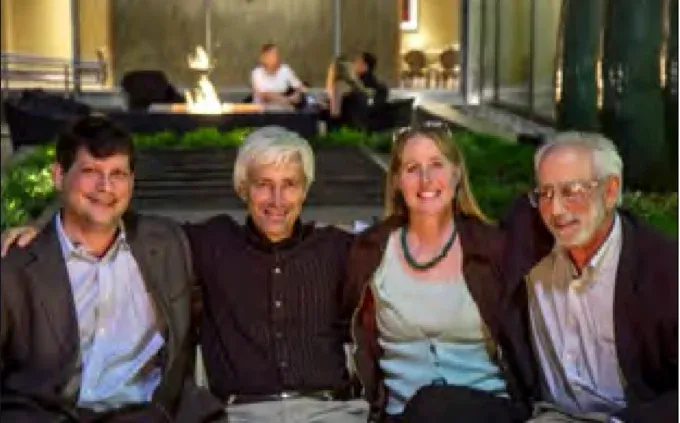
Martin Hammer, David Eisenberg, Mark Aschheim and Laura Bartels are successful in getting Appendix S - Strawbale Construction approved for inclusion in the IRC. ICC votes to adopt Oct 4, 2013
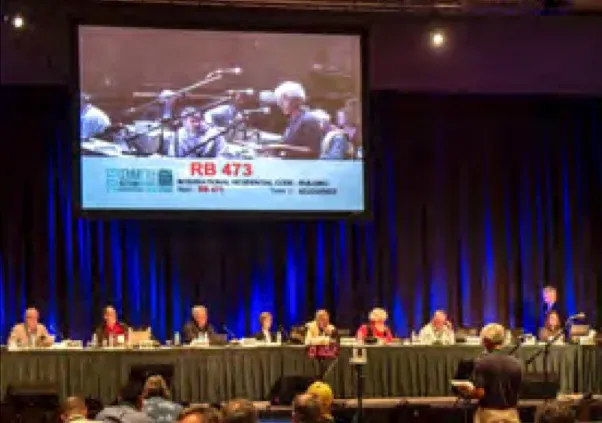
Appendix S - Strawbale Construction appears in the 2015 IRC for the first time
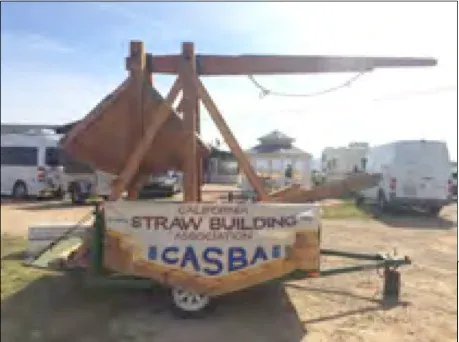
CASBA's 20th Anniversary Conference is held on the Carrizo Plain with Bill & Athena Steen as keynote speakers…of course we brought a trebuchet
California Housing and Community Development (HCD) adopts Appendix S for mandatory statewide use in the 2016 California Residential Code (CRC). Appendix R - Light Straw-Clay is included for voluntary local adoption. Over a decade of CASBA-supported, building code-related work pays off - building a residence with straw bales no longer requires filing an Alternative Methods & Materials Request to get a building permit in California and several other states!
CASBA director, David Arkin, writes 'Fire-Resistive Strawbale Walls Survive North Bay Wildfires.' Published in several places, including an article in Fine Homebuilding, it helped establish strawbale construction as a recognized fire resilient building material. Fire resistance becomes an annually-discussed topic at conferences going forward
Bruce King authors New Carbon Architecture: Building to Cool the Climate, that makes the case for bio-based buildings being an opportunity for carbon storage
CASBA sponsors publication of a Straw White Paper, written by Massey Burke, covering how carbon is sequestered in plants and soil in regenerative systems. This illustrates the need for a straw LCA and EPD, work which CASBA and others continue to support.
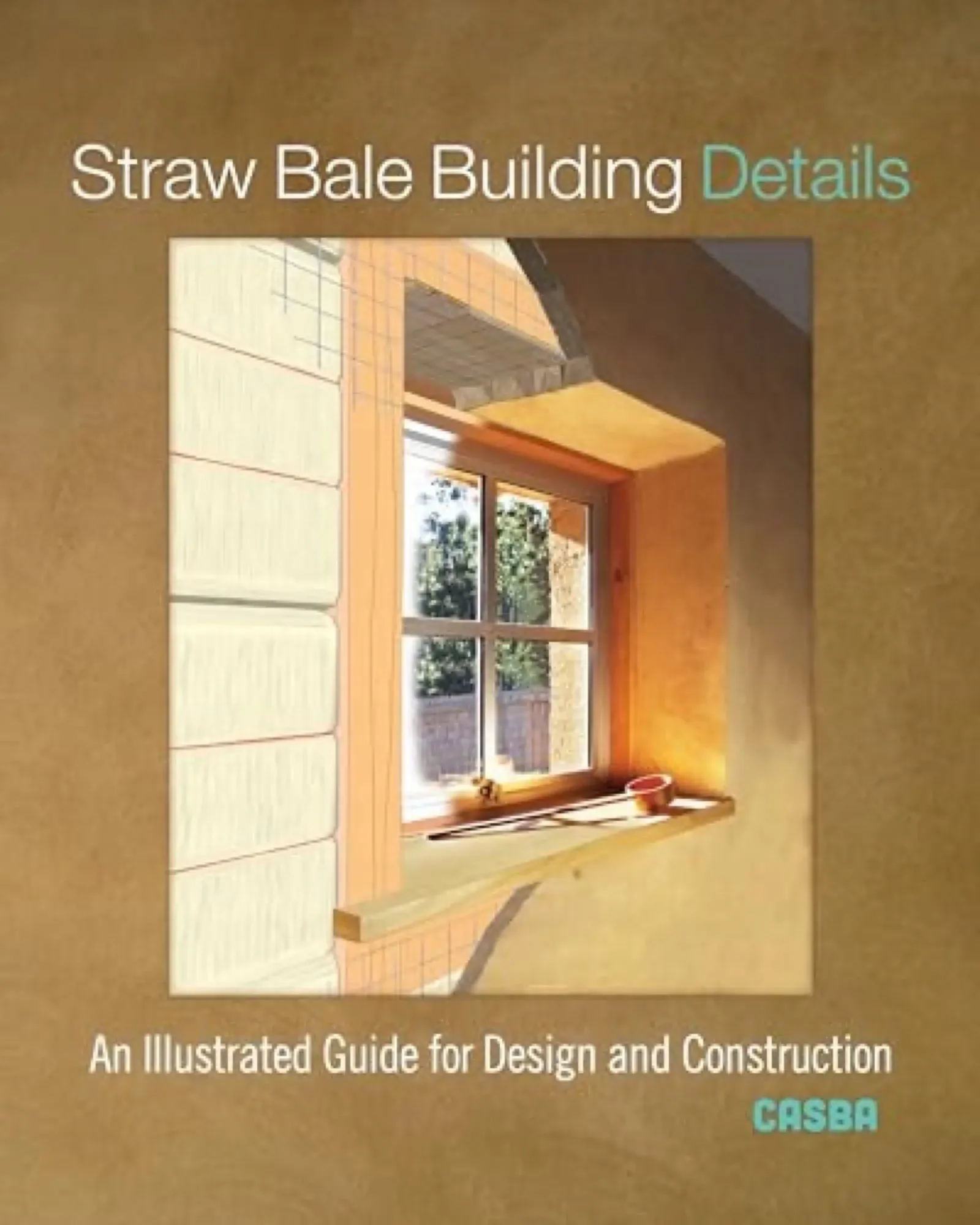
CASBA publishes Straw Bale Building Details: An Illustrated Guide for Design & Construction. Jim Reiland, Lesley Christiana and Rebecca Tasker help bring this true collaboration with dozens of member contributions across the finish line after 12 years of production
The International Straw Builders' Conference (ISBC) takes place in September in Estes Park, Colorado. Hosted by the Colorado Straw Building Association (COSBA, now part of the Natural Building Alliance)
CASBA's 20th Anniversary Conference is held on the Carrizo Plain with Bill & Athena Steen as keynote speakers…of course we brought a trebuchet
CASBA director, David Arkin, writes 'Fire-Resistive Strawbale Walls Survive North Bay Wildfires.' Published in several places, including an article in Fine Homebuilding, it helped establish strawbale construction as a recognized fire resilient building material. Fire resistance becomes an annually-discussed topic at conferences going forward
Bruce King authors New Carbon Architecture: Building to Cool the Climate, that makes the case for bio-based buildings being an opportunity for carbon storage
CASBA sponsors publication of a Straw White Paper, written by Massey Burke, covering how carbon is sequestered in plants and soil in regenerative systems. This illustrates the need for a straw LCA and EPD, work which CASBA and others continue to support.
CASBA publishes Straw Bale Building Details: An Illustrated Guide for Design & Construction. Jim Reiland, Lesley Christiana and Rebecca Tasker help bring this true collaboration with dozens of member contributions across the finish line after 12 years of production
Martin Hammer, David Eisenberg, Mark Aschheim and Laura Bartels are successful in getting Appendix S - Strawbale Construction approved for inclusion in the IRC. ICC votes to adopt Oct 4, 2013
Appendix S - Strawbale Construction appears in the 2015 IRC for the first time
California Housing and Community Development (HCD) adopts Appendix S for mandatory statewide use in the 2016 California Residential Code (CRC). Appendix R - Light Straw-Clay is included for voluntary local adoption. Over a decade of CASBA-supported, building code-related work pays off - building a residence with straw bales no longer requires filing an Alternative Methods & Materials Request to get a building permit in California and several other states!
Martin Hammer, Anthony Dente, John Fordice and others are successful in getting Appendix AU - Cob (Monolithic Adobe) approved for the 2021 IRC
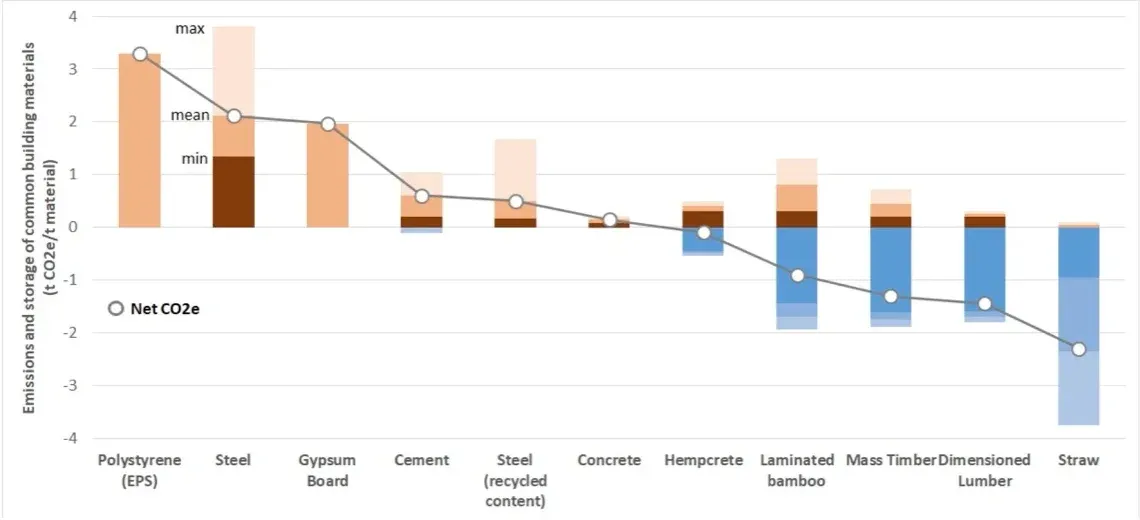
The Department of Energy, ARP-E (Advanced Research Projects) solicits grant applications for Carbon Storing Materials, including a graph showing carbon emissions associated with traditional building products compared with bio-based building products that store carbon. For the first time, the US Federal Government acknowledges straw as the best building material to minimize the carbon footprint of a building.
Appendix AU - Cob (Monolithic Adobe) appears in the 2022 CRC, but only for voluntary adoption by local jurisdiction. Updates appear in the Strawbale and Light Straw-Clay Appendices, now titled Appendix AS and Appendix AR respectively.
Bruce King & Chris Magwood, inspired by the increasing commitment to reduce our carbon footprint in the built environment and Massey's white paper publish Build Beyond Zero: New Ideas for Carbon-Smart Architecture
Verdant Building Products / Verdant Panel incorporates with grant money from the DOE, joining several other straw panel startups across North America and the world
After hiring a consultant to begin an insurance-focused project to tackle underwriting, CASBA is proud to take part in UC Davis's first WiReS (Wildfire Resilient Structures) Conference, bringing Scientists, Researchers, Academics, Fire professionals, Insurance professionals, Community Leaders, Builders, etc... together for the first time to network on cross-disciplinary solutions for wildfire safety in the built environment
CBSC approves revisions to Straw Bale Appendix, now named Appendix BJ, including acknowledging the "BOEBS" (Bales on-end between studs) system that uses plywood sheathing for lateral resistance. Light Straw Clay Appendix, now Appendix BI, and Cob (Monolithic Adobe), now Appendix BK, are adopted into the upcoming 2025 CRC
The Palisades / Eaton Fires in January, 2025 reignites a conversation around fire resistance and local availability of natural building materials. CASBA creates a Fire Rebuild Toolkit committee that gathers and collates testing data, builders, straw growers, code information and makes it available online for free with the hope of encouraging as much rebuilding with natural materials as possible
CASBA launches a hands-on Professional Course in Straw Bale Construction in August 2026, in Cottage Grove, OR, to train the next generation of builders of straw and natural building materials
CASBA's 30th Anniversary conference is held in conjunction with Cal Poly San Luis Obispo. The conference is held at El Rancho Chorro and Cal Poly's campus but a contingent of founders and new members returned to the Carrizo Plain to toast CASBA's enduring legacy, still spreading straw and natural building gospel after 30 years, and reinvigorated with a new generation of enthusiasts and cross-pollination with like-minded organizations
The Department of Energy, ARP-E (Advanced Research Projects) solicits grant applications for Carbon Storing Materials, including a graph showing carbon emissions associated with traditional building products compared with bio-based building products that store carbon. For the first time, the US Federal Government acknowledges straw as the best building material to minimize the carbon footprint of a building.
Bruce King & Chris Magwood, inspired by the increasing commitment to reduce our carbon footprint in the built environment and Massey's white paper publish Build Beyond Zero: New Ideas for Carbon-Smart Architecture
Verdant Building Products / Verdant Panel incorporates with grant money from the DOE, joining several other straw panel startups across North America and the world
After hiring a consultant to begin an insurance-focused project to tackle underwriting, CASBA is proud to take part in UC Davis's first WiReS (Wildfire Resilient Structures) Conference, bringing Scientists, Researchers, Academics, Fire professionals, Insurance professionals, Community Leaders, Builders, etc... together for the first time to network on cross-disciplinary solutions for wildfire safety in the built environment
The Palisades / Eaton Fires in January, 2025 reignites a conversation around fire resistance and local availability of natural building materials. CASBA creates a Fire Rebuild Toolkit committee that gathers and collates testing data, builders, straw growers, code information and makes it available online for free with the hope of encouraging as much rebuilding with natural materials as possible
CASBA launches a hands-on Professional Course in Straw Bale Construction in August 2026, in Cottage Grove, OR, to train the next generation of builders of straw and natural building materials
CASBA's 30th Anniversary conference is held in conjunction with Cal Poly San Luis Obispo. The conference is held at El Rancho Chorro and Cal Poly's campus but a contingent of founders and new members returned to the Carrizo Plain to toast CASBA's enduring legacy, still spreading straw and natural building gospel after 30 years, and reinvigorated with a new generation of enthusiasts and cross-pollination with like-minded organizations
Martin Hammer, Anthony Dente, John Fordice and others are successful in getting Appendix AU - Cob (Monolithic Adobe) approved for the 2021 IRC
Appendix AU - Cob (Monolithic Adobe) appears in the 2022 CRC, but only for voluntary adoption by local jurisdiction. Updates appear in the Strawbale and Light Straw-Clay Appendices, now titled Appendix AS and Appendix AR respectively.
CBSC approves revisions to Straw Bale Appendix, now named Appendix BJ, including acknowledging the "BOEBS" (Bales on-end between studs) system that uses plywood sheathing for lateral resistance. Light Straw Clay Appendix, now Appendix BI, and Cob (Monolithic Adobe), now Appendix BK, are adopted into the upcoming 2025 CRC
This timeline was first drawn as a single poster.
Download the CASBA Timeline poster (PDF)